Provence — Lavender, Roman History & Villages Perchés
Provence has been a top tourist destination for decades. And with its pastoral landscapes, fragrant Provence lavender fields, world-famous vineyards, perched villages, and vibrant towns and cities, it’s easy to see why. With its typical Mediterranean weather, Provence is the perfect French destination for a vacation in the sun.
What to see and do in Provence
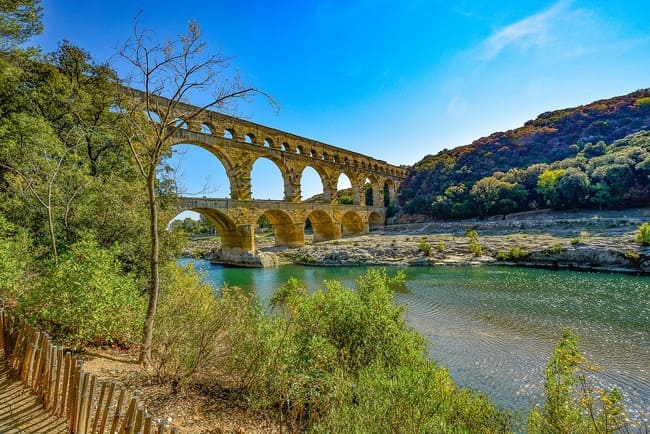
Two thousand years ago, the region now known as Provence was part of Roman Gaul, and the Romans left behind a rich legacy of monuments, buildings, roads, and even vineyards — making Provence one of the best places in France to see Roman ruins.
Roman heritage: Nîmes, Arles, and Glanum
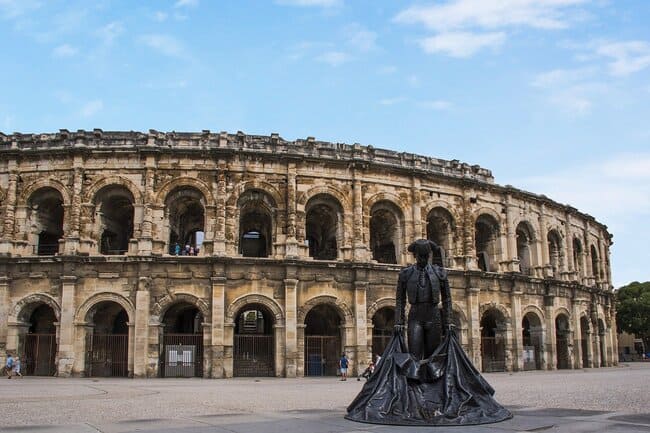
The city of Nîmes, with its pretty, palm-lined streets, was once one of the most important cities of Roman Gaul. Today, visitors flock there to see the impressive Roman amphitheater, a two-tiered structure built to seat 24,000 spectators who crowded together to watch gladiatorial contests and public executions. Nowadays, the amphitheater hosts concerts and other performances. The adjacent museum has reproductions of gladiatorial armor, and even original bullfighting costumes. Other Roman sights in Nîmes include the Maison Carrée (“square house” — though it’s actually rectangular) and the Musée de la Romanité, a museum containing over 5,000 artefacts from the region.
Arles is a place that will probably give you a strange sense of déjà-vu even if you’ve never heard of it. Vincent Van Gogh spent just over a year there in 1888–89 and painted some 200 paintings of the place — and the town has naturally capitalized on this claim to fame, with many of its most popular attractions related to the artist.
And if Nîmes and Arles have whetted your appetite for Gallo-Roman history, the once-thriving Roman town of Glanum is well worth a trip. Including baths, temples, columns, houses, and marketplaces, the archaeological site offers a glimpse into the everyday lives of the Romans in Gaul 2,000 years ago.
Avignon, Aix-en-Provence, and Saint-Rémy
Avignon is most famous today for its annual arts festival, which spans several weeks every July. Things to do in Avignon include exploring the medieval ramparts and bridge, wandering leafy lanes, and indulging in Provençal delicacies in one of the many fine restaurants. The main attraction is the Palais des Papes — Popes’ Palace — the largest Gothic palace ever built, on the UNESCO World Heritage list since 1995. Seven successive popes lived there for almost seventy years in the 14th century, following a conflict between the papacy and the French crown.
For left-bank, Parisian chic, don’t miss Aix-en-Provence (“aix” is pronounced like the letter “x”). Aix is an elegant city, famous for its leafy boulevards, inviting cafés and restaurants, and pristine squares lined with 17th and 18th-century mansions. Cours Mirabeau is the grandest avenue — laid out in 1650, it’s guarded by a pair of stone lions who overlook those café-hopping along the street. One of the best things to do in Aix is to head to the medieval-Renaissance old town, particularly on Tuesdays, Thursdays, and Saturdays when the bustling market takes over the squares. For the grandest aristocratic townhouses, don’t miss the Mazarin district.
Aix is also the birthplace of French painter Paul Cézanne, who loved the place. Visitors can tour the artist’s own workshop, and permanent collections of his work are on display at two museums, the Musée Granet and the Hôtel Caumont. To experience Cézanne’s landscapes first-hand, a drive along the Route Cézanne is in order — the only French road classed as a Historic Monument, linking Aix-en-Provence to the village of Le Tholonet through extraordinary scenery.
Not far from Aix is the cultured and charming Saint-Rémy-de-Provence, a much smaller town which has managed to retain its charm and identity despite its status as a tourist hotspot. Like much of Provence, it’s busy in the summer, but it’s still possible to find peace in the tranquil backstreets of the old town.
The Lubéron, villages perchés, and wine
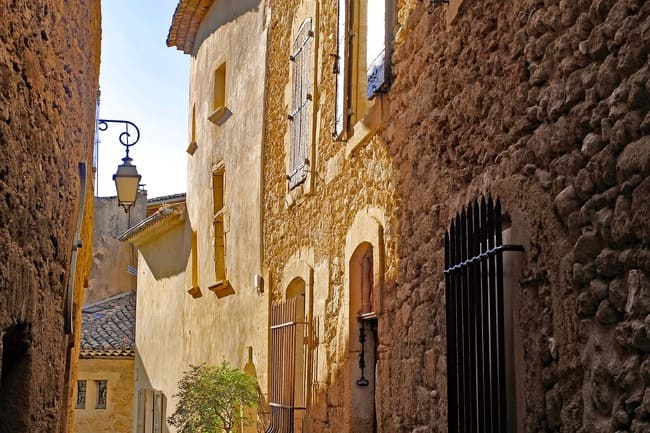
A Provence holiday is just as well spent driving the back roads through the varied and beautiful countryside. The region is home to France’s deepest gorge and oldest road, and lavender fields, olive groves, and snow-topped mountains make for an extremely scenic drive. For outdoor pursuits, the Lubéron mountain range and national parks are perfect for hiking, kayaking, and canoeing. The area is also home to some of the most picturesque villages in France, such as Roussillon, Gordes, and Ménerbes, whose houses perch precariously on the rocky hillsides.
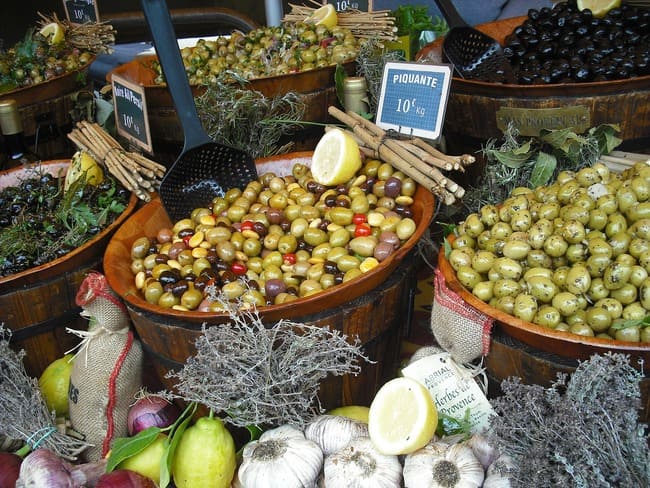
And of course, you can hardly talk about Provence without mentioning wine. Historically specializing in rosé — best sipped on a terrasse in Aix or watching the sunset on a rocky hillside in the Lubéron — the Provence wine region has been making wine for centuries and has no shortage of vineyards to visit. These days, many younger vignerons are moving towards organic wines and traditional methods of farming, so you may well stumble on pleasant pastoral scenes from times gone by: fields ploughed by horses, or flocks of sheep grazing instead of weedkillers.
The best time to go to Provence
Provence is at its busiest in July and August, when beaches and attractions are crowded and hotels fully booked. However, the famous arts festivals in Avignon and Aix-en-Provence make it worth braving the crowds.
There’s another reason to visit Provence in the summer: the rolling fields of fragrant lavender pictured on so many guidebook covers are in full bloom from late June to early August — the best period to see the Provence lavender fields.
For a more peaceful Provence holiday, try April–June and September–October, when the weather is more tolerable than in the scorching summer and the cities more peaceful.
While it’s certainly possible to travel to Provence in the winter (and the idea of spending the holidays in the South of France is an attractive one), note that many hotels close up for several months during the low season.
Travel to Provence with Paris-Toujours
Need some help planning your Provence holiday? We can organize private day tours to the Lubéron, an area encompassing vineyards, ancient abbeys, Provence lavender fields, and villages perched precariously on the hillsides.
We can also arrange private tours to the Alpilles mountains, where hilltop villages like Les Baux-de-Provence and impressive scenery await.
We’ve organized plenty of private wine tours and tastings of famous wines like Châteauneuf-du-Pape, Gigondas, and Vacqueyras, as well as private tours of the Roman sites scattered around the region.
If all that exploring makes you hungry, how about a private Provençal cooking class with a view over the Lubéron hills? And for the more active among our guests, we can organize a private bike tour at the foot of Mont Ventoux, Provence’s highest peak and world-famous étape of the Tour de France.
Whatever your Provençal dreams, contact us today to make them a reality!
Only with Paris-Toujours
Just across the Rhône River from Avignon lies Villeneuve-lès-Avignon, a compact town with plenty of attractions but without the crowds of Avignon or Aix. Explore a 14th-century hilltop fort with spectacular sweeping vistas over the surrounding countryside, and the Carthusian monastery — La Chartreuse — and its gardens.