Bordeaux Wine Region
A one-time important Gallo-Roman wine-trading town, and later a key port of Europe in the Middle Ages, Bordeaux is a city rich in history — today 18 square kilometers, or a whole half of the city, is listed as a UNESCO World Heritage site. It’s also a vibrant, modern place with plenty to see and do.
And aside from the many things to do in Bordeaux itself, the region around the city is one of the most famous wine-producing regions in France — and indeed the world. There are plenty of other, non-wine-related things to do in the region too, on top of a Bordeaux wine tour.
What to see and do in Bordeaux
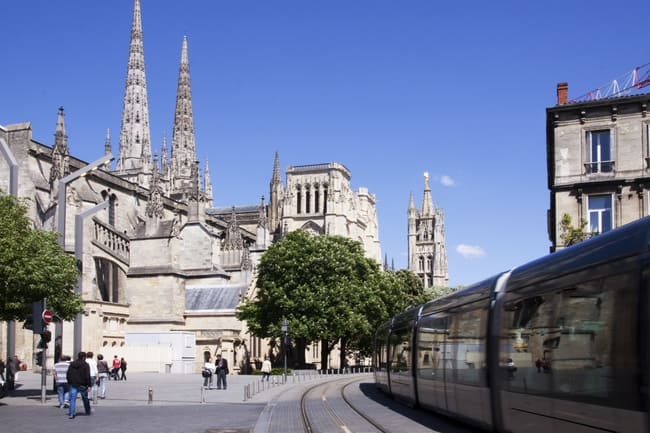
Things to do in Bordeaux itself are as numerous as they are varied. Be sure to devote some time to simply soaking up the history of the world’s largest urban UNESCO World Heritage Site. Architectural highlights include the elegance and symmetry of Bordeaux’s most iconic square, the Place de la Bourse, built in the 18th century, and Bordeaux’s three major churches, which were all listed as UNESCO World Heritage sites long before the city’s classification.
The three great churches of Bordeaux
The largest of the three, the Cathédrale Saint-André, was first consecrated in 1096, though most of what can be seen today dates from the 14th and 15th centuries. For panoramic city views, climb the 231 steps of the gargoyle-adorned belfry, Tour Pey-Berland.
From there, head to the flamboyant Gothic Basilique Saint-Michel, famous for its stained glass. If there’s any strength left in your legs, the basilica’s 114m belltower can also be climbed between April and October.
The last of the three churches is the Romanesque Basilique Saint-Seurin. There’s been a church on this site since at least the 5th century, and Gallo-Romans buried their dead in the necropolis here. It’s worth a visit for its hexagonal belfry, stained glass, and crypt containing the remains of early bishops, if that’s your kind of thing.
Museums and culture
For lovers of the arts, the city of Bordeaux is home to several high-quality museums, including the Musée des Beaux-Arts, which covers occidental art from the Renaissance to the mid-20th century. Occupying two wings of the 1770s-built Hôtel de Ville (town hall), the museum has been delighting visitors since 1801.
For something a little different, don’t miss the city’s wine museum, La Cité du Vin. Housed in a contemporary building designed to look like a wine decanter, the museum contains 3,000 square meters of exhibits divided into twenty themed sections focusing on all things wine. The best part? All visits end with a glass of wine (or grape juice for little ones) in the museum’s restaurant, Le Belvédère, complete with panoramic views over the River Garonne.
The Bordeaux wine region
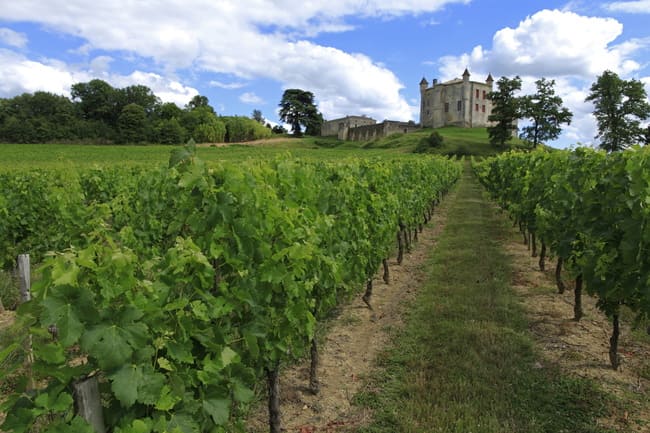
Outside of the city, there’s plenty to see and do in the Bordeaux region, one of the oldest and most prestigious wine-growing regions in the world. The Bordeaux wine region is naturally divided by the River Garonne, so you’ll hear locals talking about wines from the right bank (rive droite) and left bank (rive gauche). Highlights of the right bank include the villages of Pomerol and Saint-Émilion, the latter home to more than 900 wine growers producing wines famous the world over — merlots, cabernet sauvignons, and cabernet francs. The village of Saint-Émilion is home to a marvelous monolithic church: its three naves and the catacomb beneath are actually underground, painstakingly dug into the rock hillside. The village and its surrounding vineyards was also the world’s first wine-growing landscape to be listed as a UNESCO World Heritage site — a must on any Bordeaux wine tour.
A large part of the left bank is the Médoc region, stretching from the Atlantic Ocean in the west to the Gironde River in the east, with vast swathes of pine forest in between. As well as vineyard visits and wine tasting, the Atlantic coast offers seaside and water activities, and Carcans-Hourtin, France’s largest lake, offers rowing and sailing. For a unique experience, visit the Odysée de la Rose Pauillac, where an immersive light, sound, and video journey takes you through a Médoc vineyard.
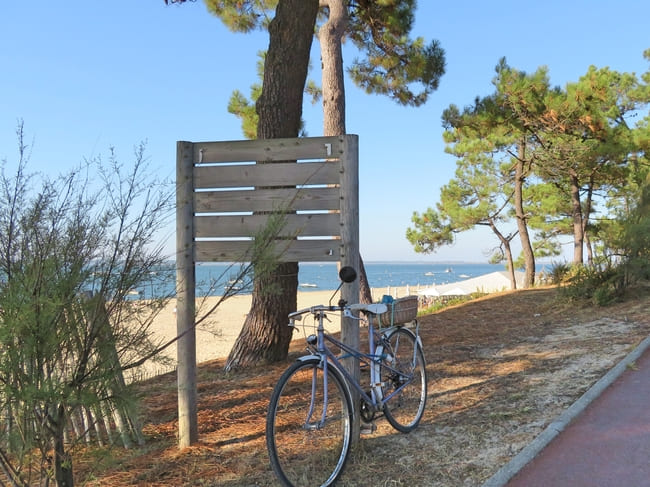
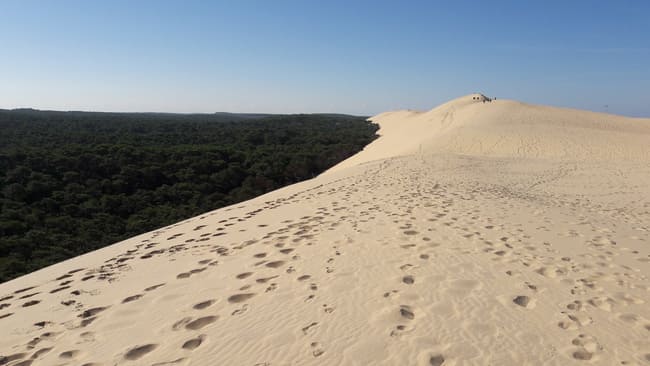
To the very west of the region, where France meets the Atlantic Ocean, is Arcachon, a seaside town with 1950s architecture and buckets of charm — its four quarters are, pleasingly, named for the four seasons. At nearby Arcachon Bay, a long-time oyster-catching area, you’ll find the magnificent Dune du Pilat. More than 2 km long, 600 m wide, and with 55 million m³ of sand, the Dune du Pilat is France’s largest sand dune. From Easter to All Saints’ Day, a staircase is erected to allow visitors to climb the 106 m to the top for sweeping views across the bay.
The best time to go to Bordeaux
The Bordeaux region is busiest from June to August, which is a perfect time for a Bordeaux wine tour — vineyards are open, and the many outdoor activities the region has to offer are in full swing.
However, the region is of course less crowded in the spring (March–May) and autumn (September–October), and if you’re lucky the weather will still be fine.
One of the most important times of year in the region is the wine harvest, from late August to October. Be aware, however, that many vineyards close to visitors during this period to concentrate on those all-important grapes.
Travel to Bordeaux with Paris-Toujours
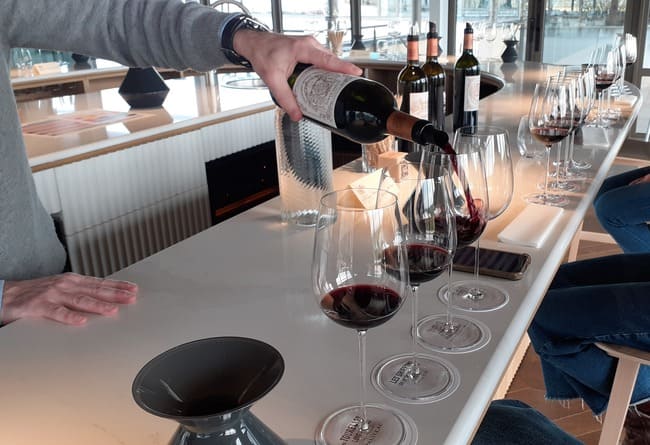
If you’re travelling from Paris to the Bordeaux region to experience wine on a Bordeaux wine tour, we’re happy to accommodate with private experiences and tastings.
We can also arrange a private Bordeaux river cruise on the Gironde River, or a private day tour to Arcachon to taste the local delicacy (oysters) and even climb the Dune du Pilat, if you’re feeling up for a challenge.
Hungry? Learn to cook like a local with a cooking class at a local wine-making château. And for the sporty ones, a private bike tour through the vineyards of Saint-Émilion is not to be missed.
Planning a trip to Bordeaux? Contact us today to find out how we can help!
Only with Paris-Toujours
A trip to Sauternes, a very peculiar Bordeaux wine region. Because of the dense foliage along the River Garonne in this area, mists cause a particular rot called Botrytis to set into the grapes. Disgusting as this may sound, this gives the grapes a unique, sweet taste — which makes Sauternes wine famous (and expensive!) around the world.